Skip to content
Sun Software logo with the tagline Engineering Beyond Code
Medical Clinics & Private Practices

Medical website design that gets forms done before the waiting room.

A new patient wants to know three things: do you treat this, do you take my insurance, and when can I come in. Medical website design should answer all three before they pick up the phone, so we build the service pages, online booking and intake forms that do it. It works for private clinics, specialist practices and urgent care centres.

Solution for

Medical Clinics & Private Practices

One plan. One owner.

What the research says

Patients wait weeks for a slot, then wait on hold.

Published surveys from the US and England show what patients run into before they are seen: long waits for a first appointment, a busy phone line, insurance checks and a portal that goes unused.

  • is the average wait for a new patient appointment with a physician, across 15 large US metro areas and six specialties

    31 days

    What we do

    We give each service its own page that says who it is for, what the first visit involves and how to book.

  • of patients in England said it was easy to reach their GP practice by phone, in a survey with 654,714 responses

    56.9%

    What we do

    We put booking, directions, plans accepted and what to bring on your site, so the line is free for patients who need to talk.

  • of US patients surveyed had their care delayed by insurance verification issues

    22%

    What we do

    We build a plain page on the plans you accept, and collect insurance details on the intake form before the visit.

  • of people in the US were offered online access to their medical records and used it in 2024. Another 13% were offered it and did not

    65%

    What we do

    We link your patient portal from the pages where patients need it, and explain each use in plain words.

The problem

Where does a clinic day go wrong before the first patient is seen?

Most of it happens at the front desk, in the first hour, on the phone and on a clipboard. If you run a clinic or manage a practice, some of these will sound like your Monday morning.

01

The phone line is jammed from the minute you open

02

New patients download a PDF, print it and bring it half filled in

03

Insurance details are checked at the desk, with the patient standing there

04

One long services page covers every condition you treat

05

Referrals arrive by fax, email and phone, and one goes missing

06

You pay for a patient portal that few patients log in to

One plan, several services

Who does what on your project?

A patient reads about a condition, checks their insurance, books, fills in a form and turns up. For them that is one visit to your clinic, not five systems. So we plan it as one path, and each part of our team takes the piece it knows best.

  1. 1

    Web, Ecommerce & Digital Platforms

    Your clinic site, service and condition pages, clinician profiles and online intake forms.

  2. 2

    AI Agents & Business Automation

    Form delivery, booking confirmations with forms attached, and an assistant for front desk questions.

  3. 3

    Custom Software & SaaS Development

    Referral intake and links to your practice management system and patient portal.

  4. 4

    SEO, AI Visibility & Digital Growth

    Pages found for each service and condition, and a correct profile for every location.

First conversation

What we ask before we propose anything

Three questions show us where your front desk loses its morning.

01

What are the five questions your reception team answers most in the first hour of the day?

02

Which forms does a new patient fill in, and who types them into your system afterwards?

03

How do referrals reach you today, and how do you know none were missed?

How it works

How we work with your clinic

We start at your front desk, not at the homepage. What your team answers on the phone all day tells us what the website should say.

  1. 01

    Listen to the front desk

    We ask your reception team for the calls they take most at opening time, and read the forms a new patient gets today.

    What you get

    A list of the questions and forms that cost your team the most time.

  2. 02

    Agree the patient data rules

    You tell us which rules apply to your patient data, which system holds the record and who may see a completed form. It goes into the contract.

    What you get

    A written list of what each form collects, where it goes and who sees it.

  3. 03

    Plan the service and condition pages

    We set out one page per service or condition, plus insurance, self-pay, referrals and first visit. Your clinicians check every clinical line.

    What you get

    A page plan and copy approved by your clinicians.

  4. 04

    Build the site, booking and intake

    We build the site and turn your paper and PDF forms into online ones, connected to your booking and practice management system where it allows.

    What you get

    A working site and forms on a private test copy.

  5. 05

    Test with reception, then launch

    Your front desk books a test patient from search to arrival. We fix what trips them up, launch, and show your team how to edit hours, clinicians and pages.

    What you get

    A site your practice manager can run.

What you get

What changes at your front desk?

Here is what you, your practice manager and your reception team should notice. Exactly what you get depends on what we agree to build.

What we show as proof

We have no measured result from a medical clinic to show you. The nearest is an automation we built for a US telehealth company, where a paying customer is now enrolled and booked without the owner stepping in. The points above describe how projects like this are meant to work. Where a benefit has not been measured, we call it intended, not proven.

  • Patients arrive with forms done. History, consent and insurance details come in before the visit, so check-in is a name and a hello.

  • A quieter phone at opening time. Booking, directions, plans accepted and what to bring are answered on the site, so the line is free for patients who need to talk.

  • Patients find the right service. Each service and condition has its own page that says who it is for and how to book it.

  • Referrals land in one queue. Referring practices use one form, and your team sees every referral in one place.

  • Your team keeps it current. Your practice manager updates hours, clinicians, plans accepted and walk-in times without a developer.

Public cases

Two public cases from medical practices

Both were reported by others, a US state attorney general and the trade press. Neither practice is our client. Each one shows a mistake a clinic can plan against.

  • Regulator settlement ยท 2023

    A psychiatry practice named patients' conditions in review replies

    What happened

    The US Department of Health and Human Services said Manasa Health Center, a psychiatry practice in New Jersey, disclosed the health information of four patients when it replied to their negative online reviews. The replies included comments about diagnoses and mental health conditions. The practice paid $30,000 and agreed to a corrective action plan.

    What we do about it

    When we look after your Google Business Profile, we agree reply wording with you that never mentions anyone's care or confirms they are a patient. You approve it before anyone uses it.

    Source: TechTarget, 2023
  • Regulator settlement ยท 2024

    An ENT practice was hit by ransomware twice in ten days

    What happened

    The New York Attorney General said Albany ENT & Allergy Services suffered two ransomware attacks in 2023, about ten days apart, exposing records of 213,935 New Yorkers. The practice had no security staff of its own, and its outside vendors had not installed critical updates on time. It must invest $2.25 million in information security over five years.

    What we do about it

    We look after your website and forms, not your clinic's network. For those, we write down what each form collects, where it goes and who sees it, so you know what is held where.

    Source: New York Attorney General, 2024
Proof

Recent work

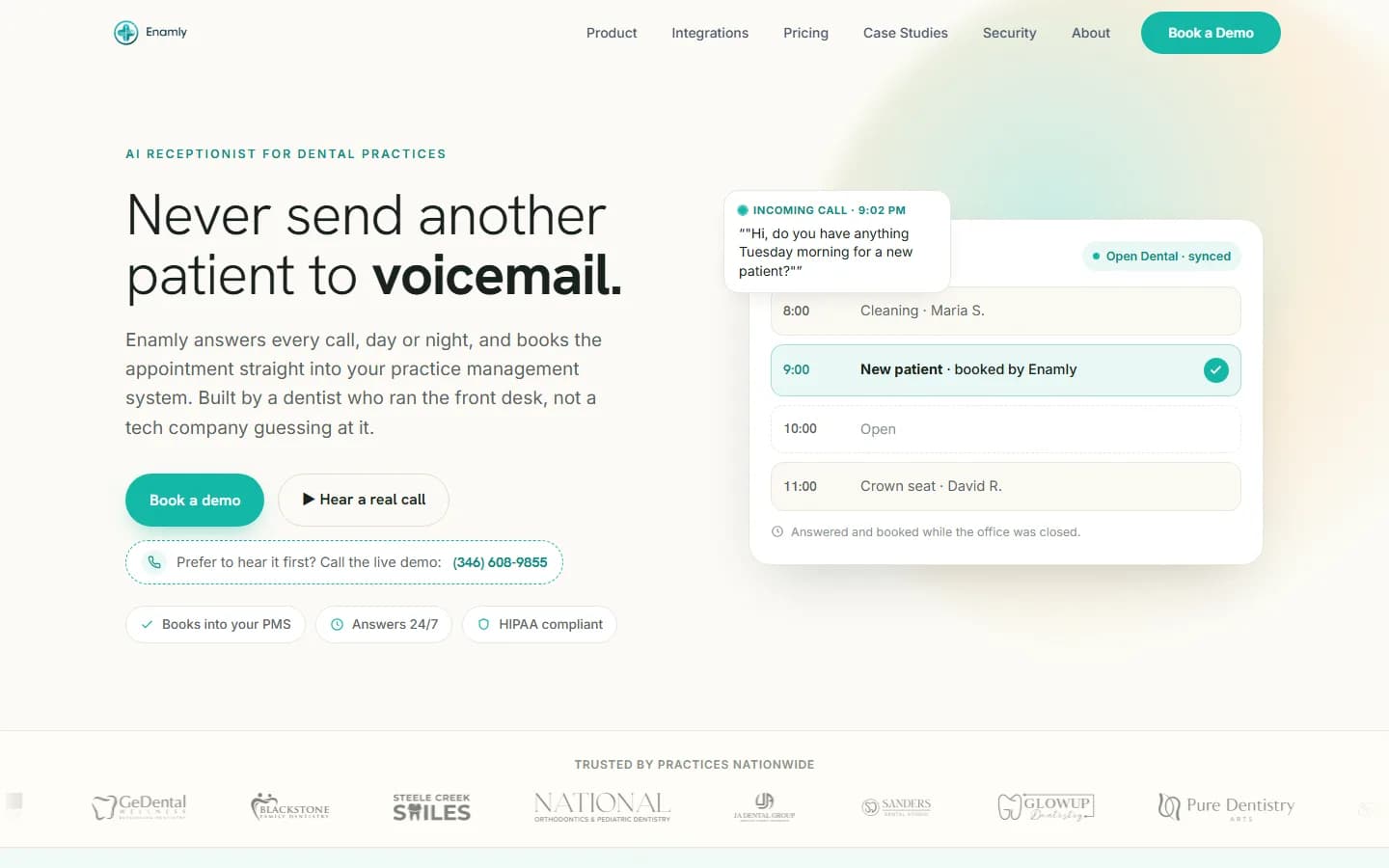
We have not built a site for a medical clinic yet, and we won't pretend we have. This is a product website we built for an AI receptionist for dental practices. We built the website, not the AI. Work for private clients is shown on a call, with the client's agreement.

FAQ

Questions from clinics and private practices

What does medical website design include?

A page for each service and condition, online booking, intake forms patients finish at home, a plain page on insurance and self-pay, and a correct profile for each location. Your clinicians supply and approve the clinical wording.

Can patient intake automation send forms straight into our EHR or practice management system?

Sometimes. It depends on whether your system accepts outside forms and what your plan with the vendor allows. We check that before we quote. If it can't take them, the completed form reaches the staff you name, and we tell you which step stays manual.

Where does the information patients type into a form end up?

Where you and we agree in writing before the build. We don't tell you which law covers your practice. That is for your own adviser. We agree with you which rules apply to your patient data, and build to what the contract sets out.

Do we have to replace our patient portal?

No. Most clinics get more from the portal they already pay for once patients can find it and know what it is for. We link to it from the right pages and explain each use in plain words. We build something new only if the portal can't do a job you need.

Who writes the condition and treatment pages?

Your clinicians own the clinical content. We structure each page, edit it into plain words and write the parts about booking and first visits. Nothing clinical goes live until a clinician at your practice has approved it.

Can an urgent care site show the current wait time?

It can if your queue or check-in system can share that number. We check before we quote. If it can't, we show today's hours and walk-in times clearly, and let patients book a slot where you offer one.

  1. 1Review My Clinic Website
  2. 2We reply within one business day
  3. 3Discovery call
  4. 4Step one: Listen to the front desk

Show us your new patient forms and your busiest hour on the phone.

If your reception team spends the first hour on the phone and the second on clipboards, send us your new patient forms and your website. We'll tell you what a patient could do before they arrive, and what we would build first.

  • The first conversation is free
  • NDA before you share anything
  • A reply within one business day