Skip to content
Sun Software logo with the tagline Engineering Beyond Code
Marketplace Startups

Marketplace development for two sides who won't go first.

Buyers won't come to an empty marketplace, and sellers won't list where there are no buyers. You need a marketplace development company that helps you pick the side to win first, then builds the profiles, search, payments and trust checks that let the two sides find each other and finish a deal on your platform.

What the research says

A marketplace runs on trust and on payouts.

Surveys of marketplace buyers and sellers show the two things that decide if people stay: can they trust the other side, and can sellers get their money.

  • of UK buyers on second-hand marketplaces said they had experienced a scam in the two years to January 2024

    32%

    What we do

    We build account verification and a queue where new and flagged accounts wait for your team's decision.

  • of marketplace sellers in a survey of 2,800 would consider switching platforms for better payouts

    70%

    What we do

    We show each seller what is held, what has been released and when the next payout lands.

  • is the average wait for sales proceeds to reach the bank, in a survey of 1,049 marketplace sellers

    3.3 days

    What we do

    We connect a payment provider made for marketplaces and agree your hold, release and payout rules before we build.

  • of 1,017 marketplace shoppers named the validity of reviews as a concern about buying on marketplaces

    27.5%

    What we do

    We let a review be left only after a completed order, and each side reviews the other.

The problem

Where does a two-sided marketplace stall?

A marketplace has problems a one-sided product never meets. Two groups have to trust each other, and both have to trust you with the money. You may recognise some of these.

01

Sellers sign up, see no buyers and never finish a listing

02

Search returns thin, stale or empty results in most categories

03

The two sides meet on your platform, then close the deal by phone or email

04

Sellers can't see what you are holding or when their payout lands

05

A dispute arrives and there is no record of who agreed to what

06

Fake accounts and made-up reviews show up before you have a way to check them

The solution

What our marketplace development covers

Start with the part that is stopping deals today. Each one links to the service behind it.

One plan, several services

Who does what on your marketplace?

A marketplace is two products that share one database: one for the people who sell and one for the people who buy. Each needs its own pages, its own sign-up and its own reasons to stay. We plan both together, and each part of our team takes the piece it knows best.

  1. 1

    Web, Ecommerce & Digital Platforms

    Your public site, the sign-up pages for each side and the category pages visitors land on.

  2. 2

    AI Agents & Business Automation

    Flags on suspicious accounts and listings, payout and review reminders, and a queue where a person makes the call.

  3. 3

    Custom Software & SaaS Development

    The marketplace itself: accounts for both sides, listings, search, orders, held payments, payouts and disputes.

  4. 4

    SEO, AI Visibility & Digital Growth

    Listing, category and city pages that search engines can read, so demand can arrive without an ad behind every visit.

First conversation

What we ask before we propose anything

Three questions show us how far your marketplace is from its first repeat deal.

01

Which side is harder to win, and how many of them have you signed up so far?

02

How does a deal get done and paid for today, even if that is by email and bank transfer?

03

After two sides meet on your platform, what stops them doing the next deal without you?

How it works

How we work with a marketplace founder

We follow one deal from end to end: a listing goes up, a buyer finds it, money moves, both sides leave a review. We build in that order.

  1. 01

    Pick the first side and the first deal

    We agree which side you recruit first, the category or city you open in, and what one finished transaction looks like.

    What you get

    A written plan for the first release, and a list of what waits.

  2. 02

    Build the supply side

    We build sign-up, profiles and listings for the side that has to be there first, so your first buyers do not land on empty shelves.

    What you get

    A private test copy your first sellers or providers can fill in.

  3. 03

    Let the other side find them

    We add search, filters, on-platform messages and the request, booking or order step that joins the two sides.

    What you get

    A match you can click through from both accounts.

  4. 04

    Move the money and settle disputes

    We agree your hold, release, refund and payout rules with you, connect the payment provider and build the dispute screen with the full order history beside it.

    What you get

    A test order paid, held, released and paid out, and one refunded.

  5. 05

    Open in one market and watch the leaks

    We launch in the category or city you chose, then report where sign-ups stop, which searches come back empty and where conversations leave the platform.

    What you get

    A live marketplace and a short list for the next release.

What you get

What changes for your marketplace?

What you, your sellers and your buyers should notice. Exactly what you get depends on what we agree to build.

What we show as proof

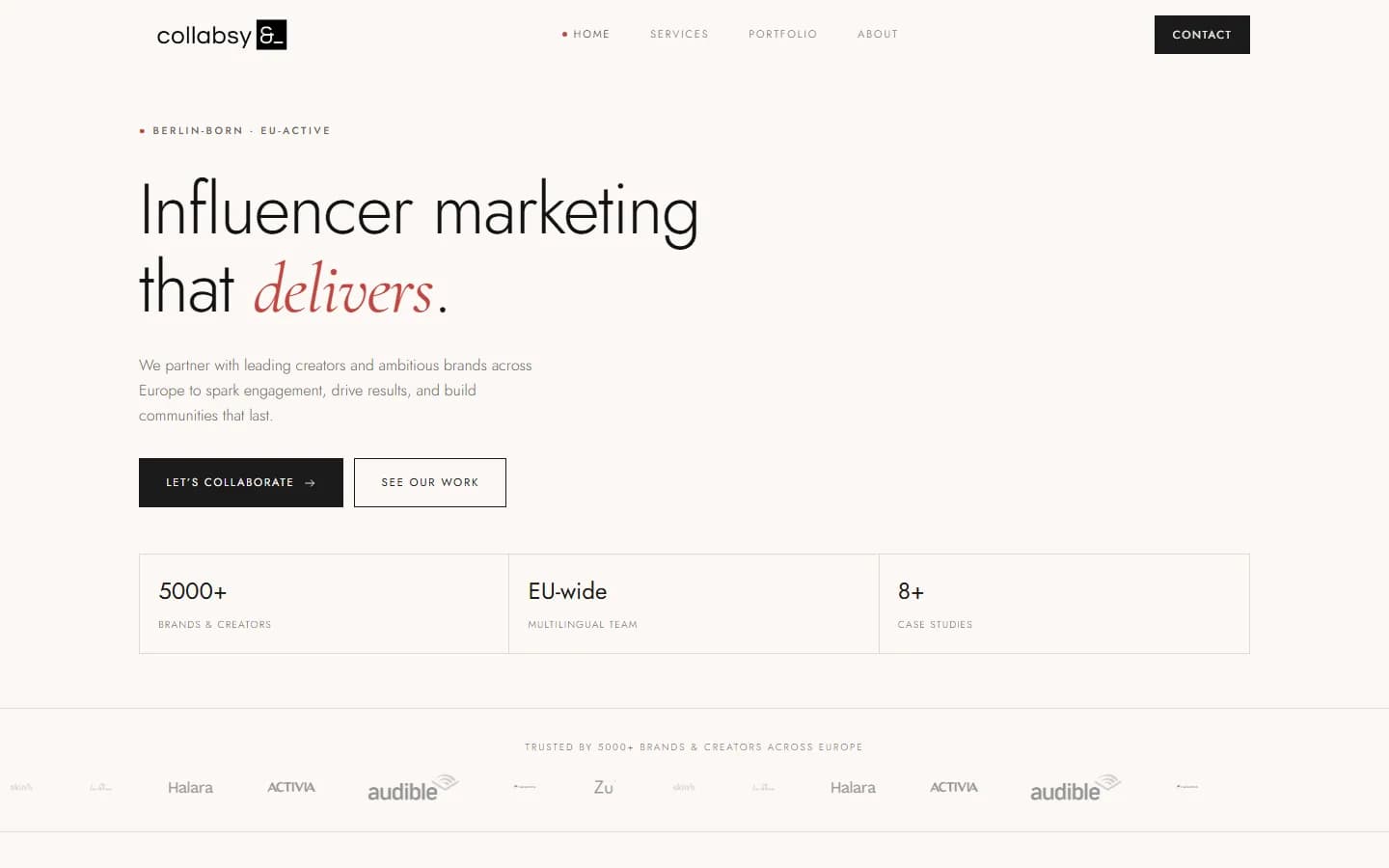
We have built in this field. We built the website for Collabsy, a platform that brings brands and creators into one workspace: a Next.js site with campaign management content, creator discovery sections and lead-generation forms. Across all our work we hold 4.9 from 1,685 reviews on Fiverr. The benefits above describe how a marketplace built this way is meant to work. Where a benefit has not been measured, we call it intended, not proven.

  • A first deal that finishes on the platform. One listing, one buyer, one payment and one payout, tested from both accounts before you open.

  • Sellers who can see their money. Each seller sees what is held, what has been released and when the next payout lands.

  • Reviews tied to real orders. Only people who completed an order can review, and both sides review each other.

  • A reason to stay on the platform. Messages, payment protection, dispute help and review history all sit with orders paid through you. They are intended to keep deals on the platform, and we report where conversations still leave.

  • A queue for the accounts that look wrong. New and flagged accounts wait in one place with the evidence beside them. Your team decides who is approved, paused or removed.

Public cases

Three public cases worth knowing

These were reported by others and none of them is our client. Each one shows a risk a young marketplace can plan for.

  • Fake listings · September 2023

    Airbnb removed 59,000 fake listings in one year

    What happened

    Airbnb said it had removed 59,000 fake listings in 2023 and stopped another 157,000 from joining. Its chief executive said refunds and rebooking cost money, but the biggest risk was to the company's reputation. Airbnb said it would start verifying listings in its largest markets.

    What we do about it

    We build verification in from the first release. New and flagged accounts wait in a queue with the evidence beside them, and your team decides who goes live.

    Source: Associated Press, via CBS News
  • Held payouts · August 2023

    Etsy sellers called for a boycott over money held in reserve

    What happened

    The BBC reported that some Etsy sellers had 75% of their money frozen for 45 days under the site's reserve system. Sellers put their shops on holiday mode and moved to rival sites amid calls for a boycott. Etsy then said it would substantially decrease the funds it held in reserve.

    What we do about it

    We agree your hold and release rules with you before we build, and show them to sellers. Each seller sees what is held, why, and when the payout lands.

    Source: Retail Gazette
  • Regulator action · June 2025

    Care.com paid more than $8.5 million over overstated job numbers

    What happened

    The US Federal Trade Commission said Care.com, which connects families with caregivers, used advertising that vastly overstated the number of jobs on its platform and made earnings claims it could not support. Care paid more than $8.5 million. In June 2025 the FTC sent more than $8.1 million in refunds to 194,207 people.

    What we do about it

    Any number we show one side about the other comes from your database. If a category is still thin, the page offers a waitlist, not a made-up count.

    Source: Federal Trade Commission
FAQ

Questions from marketplace founders

Should we build for buyers or sellers first?

Usually the side that is harder to replace, which is most often supply. A buyer who finds nothing leaves and rarely returns. A seller will wait a while if listing was quick and you are honest about how early it is. We decide this with you before we design a screen.

Do you hold our users' money?

No. The money sits with a payment provider made for marketplaces, and your platform tells it when to release, refund or pay out. We agree with you which rules apply to your marketplace and build to what the contract sets out. We don't give legal or financial advice.

Can you stop people taking the deal off the platform?

Nobody can stop it completely, and we won't promise to. What works is making the platform the better place to do the deal: protected payment, a dispute process, reviews that only count for orders paid through you. We also show you where conversations leave, so you can see the size of the problem.

We started on a no-code tool or a marketplace template. Do we have to start again?

Not always. Many marketplaces prove demand on a template first, and that is a sensible start. We look at what you have, what your users do on it and where it blocks you, such as payouts or search. Then we tell you plainly if it can be extended or needs replacing.

Does marketplace app development mean a mobile app for each side?

Often only one side does. Providers who take jobs on the move tend to need an app with notifications. Buyers who visit a few times a year are usually fine on the web. We start with the web for both and add an app where the usage calls for it.

  1. 1Discuss My Marketplace
  2. 2We reply within one business day
  3. 3Discovery call
  4. 4Step one: Pick the first side and the first deal

Show us your marketplace, or the plan for it.

Tell us who your two sides are and how a deal gets done today. We'll help you work out which side to build for first and what the first release has to do.

  • The first conversation is free
  • NDA before you share anything
  • A reply within one business day